bloggy

The Horts, collectors

I want to be like the Horts when I’m a grown-up collector. We own a few artists in common, and I like the fact that while they obviously have money, they’re spending it mostly on younger, emerging artists like Paul P. and Christian Holstad.

Sports! I'm writing something about sports!

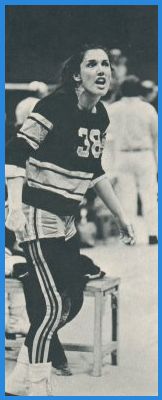
img0141.jpg

Marge Laszlo

Well, sort of. Our friend Conrad Cummings, one of the most thoughtful and politically aware composers I have ever met, was part of a concert in January of sports-oriented music given by the Avian Orchestra in the 6th floor gym of the University Settlement on the Lower East Side. His piece, titled In Memorium Marge Laszlo is an hommage to the roller derby champion. She isn’t dead, just “retired” by the forces of capitalism. This is how Conrad describes the piece:

Marge Laszlo was one of Roller Derby’s great players. The game was born on the West Coast and grew up with the early days of television. During its heyday in the 1960s a dozen teams bused all over the country. It was one of the first sports that women as well as men could make a living playing, and it provided a home and a livelihood for any number of outsiders.

Roller Derby looked anarchic. Players smashed into each other, collided into huge heaps of bodies, threw each other over the ropes into the audience, screamed at each other constantly, pulled hair, and whenever possible beat up the umpires. The highlight move was the Whip, where five or six players would link wrists to propel the player at the end into the opposing team like a projectile. Bodies would fly everywhere.

But behind all the chaos and apparent violence was actually a big extended family of players who lived and traveled together and worked out every pile-up, Whip, hair-pull, and fight sequence ahead of time. Despite the drama, athleticism, and the passionate loyalty of fans to individual teams and players, it came down to a companionable bunch of people gliding round and round the same oval track. My piece goes around its track four times.

Marge Laszlo herself is alive and well, but the game, alas, is no more. It started to lose TV viewers in the early 70s and was done in by the energy crisis when the teams couldn’t afford gas for the buses taking them from city to city. But Roller Derby lives on happily in my memory, and I’d like to think that the end of my piece is Marge’s farewell lap on her last game. Skate on, Marge!

You can hear this work, plus all of the others on the program, via New Music Box through April 15.

Go buy his CD Photo-Op. After hearing it we tracked him down and became friends with him. It is brilliant politically-aware music.

Maybe I will re-subscribe

I stopped my subscription to The Economist last year because I felt they were being intellectually dishonest with their unquestioning backing of Bush and the attack on Iraq. I always knew they were a relatively conservative news magazine, but I thought of them as principled, and a good source of non-USA news. I felt betrayed by their attitude towards the Bush administration.

Things seem to be looking up on that front.

economist-bush.jpg

Updated: OK, once I actually read the article I decided to keep my money.

As regular readers will know, The Economist endorsed Mr Bush in the 2000 election once he had beaten our preferred candidate, John McCain. That still looks the right choice for that election. Indeed, Al Gore served a handy reminder of his unsuitability and poor judgment by endorsing Howard Dean. This newspaper also supported Mr Bush’s most controversial action, the Iraq war—and despite the continuing instability in that country we do not regret that, either.

Only the GOP ones are important Catholic positions

In this helpful New York Times article, we learn what really matters to the Catholic Church.

The senator is aligned with his church on many social justice issues, including immigration, poverty, health care and the death penalty. But he diverges on the litmus issues, like abortion and stem cell research, that animate church conservatives and many in the hierarchy.

Save those unborn babies, but they’re on their own after that.

James in the Washington Post

I should have posted this yesterday. James was in the Washington Post yesterday in an article on gay marriage, quoted along with the likes of Tony Kushner and Bill Dobbs.

His take on the article is here.

Don't Ask, Don't Tell

If gays in the military are such a bad thing, why does the number of dismissals fall when we’re at war?

As the United States military continues to wage war in Iraq and Afghanistan, discharges of lesbian and gay military personnel plummeted 17% in FY2003, according to a new report from Servicemembers Legal Defense Network (SLDN).

Conduct Unbecoming, an annual review of the military’s “Don’t Ask, Don’t Tell” law, finds that gay-related discharges fell to 787 last year, down from 906 in 2002. The 2003 figures mark a 39% decrease in discharges since 2001, the year before current conflicts in the Middle East began. The number also represents the fewest gay discharges since 1995.

“Gay discharge numbers have dropped every time America has entered a war,” the report says, “from Korea to Vietnam to the Persian Gulf to present conflicts.” It goes on to note that “more of our allies have dropped their bans, and our American troops are fighting alongside openly lesbian, gay and bisexual allied personnel in the war on terrorism.”

If our military leaders are so concerned about homos serving, they should be consistent and refuse to work with most of our allies. According to SLDN, the United States and Turkey are the only two NATO countries that do not allow openly gay soldiers.</blockquote>