bloggy

Museums, the art market, and public subsidies

A set of scattered thoughts on the New Museum’s plans to show works from Dakis Joannou’s collection selected by Jeff Koons.

  • Many people have argued online via blog posts or comments that the collection is so interesting that it doesn’t matter what the ethics are in presenting it at the museum where Mr. Jouannou is a trustee.
  • I for one don’t want to see some of the limited resources and spaces available to show art in this city devoted to a huge exhibition mostly composed of previously-market-validated living artists that we have all heard of already.
  • The New Museum and other museums receive public funding, to say nothing of the subsidies represented by the tax exemption of donations of art and money. The 990 for the New Museum for 2008 shows over $940,000 coming from government grants.
  • Because public funding is still a relatively small percentage of their operating budgets, museums and other non-profit cultural spaces must raise money from wealthy patrons, foundations, and other sources (which are subsidized through tax deductions or the non-profit status of foundations).
  • This is a country that has trouble convincing taxpayers that guaranteeing decent education and healthcare for all American children is something government should do. If that is considered a luxury in the USA, the use of tax-exempt art museums to show works (owned by wealthy collectors) by artists who have been successful in the commercial art market is a rather decadent use of public subsidies.
  • If the market is how we decide what works of art are important, then the market should find a way to cover the costs of presenting these works to the public. The curatorial, educational or scholarly mission of museums is tossed aside, and thus the rationale for providing subsidies, other than the tourism draw of such institutions, disappears.
  • Abandoning the assistance that non-profit institutions have provided to emerging artists, unknown artists, and artists whose work is not successful in the commercial art market will further undermine public support for any kind of funding for culture, which is already pretty shaky.
Sand Art about World War II Ukraine

Apparently, I’m quite behind for just now hearing about this. I’m impressed that Ukraine’s Got Talent would have a performer who does Robin Rhode/William Kentridge-esque animation with sand about the Nazi invasion of her country.

Update: There is a FAQ for the video! Thanks, Marc Shifflett.

Celebrating the Yankees's money and land grab

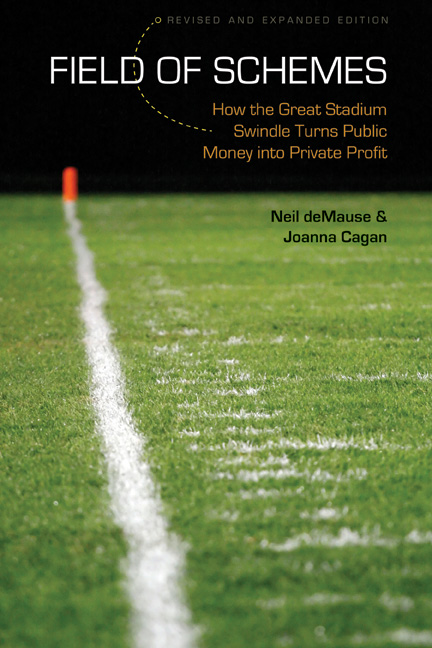
field-of-schemes.jpg

I’m glad the World Series is over so I can stop hearing about it. Here are some data points:

  • Estimated total cost of public subsidies to the Yankees for the new stadium: $1.8 billion.
  • The city turned over a Bronx park to the Yankees to build their new stadium in 2006, kicking out the kids who played there. They’re now expecting it to be replaced in 2011. The high school that lost its playing field has been offered $37,500 by the Yankees to buy a bus so they can play their games in convenient locales such as Staten Island.
  • In May, New York City’s Education Department announced a $405 million cut, an average of 4.9% per school.
  • School budget cuts are wiping out entire departments, with art classes and programs for at-risk students disappearing fastest, according to the Daily News.

[image via University of Nebraska Press]

Friedrich Schenker's "Guide for bootlickers-in-training"

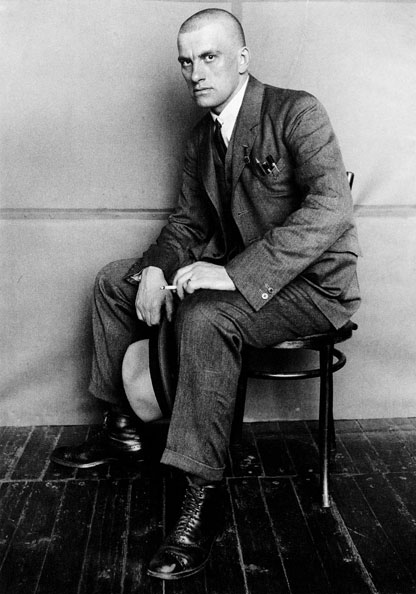
rodchenko-mayakovsky.jpg

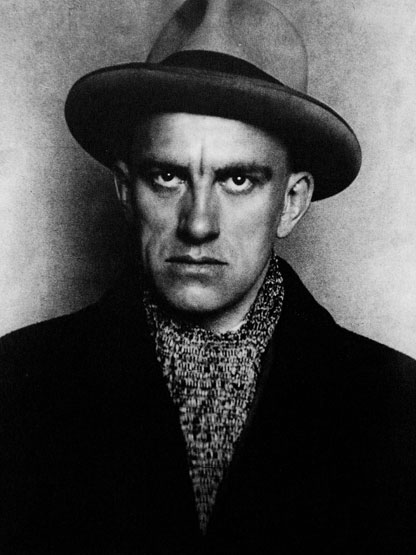
rodchenko-mayakovsky-2.jpg

Two portraits of Vladimir Mayakovsky by Alexander Rodchenko, via paris.blog.lemonde.fr

</embed>

James and I have been listening to this excellent box set of vocal music from the former East Germany.

The widget above plays a sample of Friedrich Schenker “Leitfaden fur angehende Speichellecker” (Guide for bootlickers-in-training) composed in 1974. The text is based on a 1927 poem by Vladimir Mayakovsky, in which the poet provides a satirical “guide for toadies” and at the end rips off the mask and says tells the audience to do just the opposite. In the Schenker piece, the singer tears up her music and throws it away at the end, and the pianist slams down the piano lid and stomps away. My description is adapted from the booklet of the box set mentioned above.

Marcia Tucker on Museums

I just finished reading Marcia Tucker memoir, A Short Life of Trouble, Forty Years in the New York Art World</i>. Here is a quote from the letter she wrote to the museum’s trustees after her firing from the Whitney Museum.

As a scholar, it has always been my conviction that it is the museum’s responsibility not only to reflect the consensus of educated opinion by which art history is made, but also to seek out the best work at its source, rather than only after it has achieved commercial exposure.

Thoughts on Vollmann's "Europe Central"

shostakovich-time.jpg

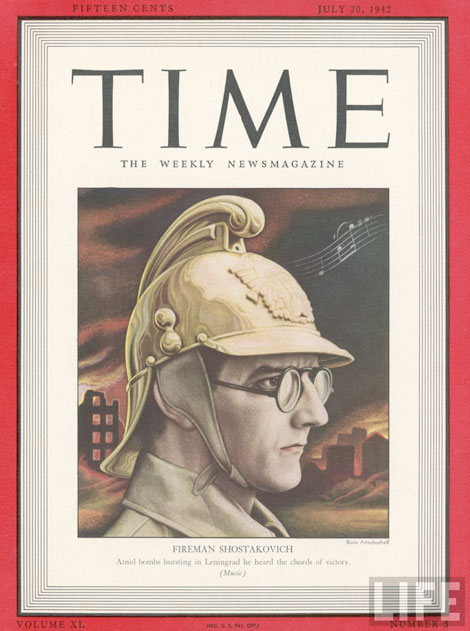
Shostakovich on the cover of Time, 1942, via Zeitschichten

William T. Vollmann’s historical novel Europe Central is at times a long, dark slog, but definitely worth the effort. His research into Nazi and Soviet history is impressive, particularly on musical topics — don’t miss the notes at the end. What other contemporary novel is likely to spend so much time with not only Dmitri Shostakovich, but less-famous composers such as Moisey Vainberg and Galina Ustvolskaya?

The only thing I disliked about the book was when the chapters about Shostakovich imitated the verbal tics he developed as he got older, due to the extreme mental stress he suffered under the Soviets. One example, from the “Opus 110” section of the book, when he is talking with NKVD men about his work, is below:

Because my hands get tired, comrades, even when I … It, so to speak, subverts me. But I’m only a worm, and my symphonies are mere, uh, so it’s no loss to, to … I do apologize.

I understand the importance of conveying how he communicated later in his life, and a letter by Isaiah Berlin about his sad visit to Oxford in 1958 certainly documents that, but it’s painful to read one hundred consecutive pages written in that style.

The long passages about the harrowing conditions for Soviet and Nazi soldiers on the Eastern Front, civilians in Leningrad, Dresden, and 1944-45 Berlin, as well as chapters set in East Germany after the war, serve as a strong antidote to the ridiculous idea that the USA saved Europe single-handedly in World War II. The Soviets and the countries of Eastern Europe lost millions of people — soldiers and civilians — as the West allowed them to grind down much of the strength of Nazi Germany. The people of central Europe were then abandoned to the sinister realities of Stalinism once victory was declared.

The novel is overlong, and could have used some more editing, but its empathy for the people of Europe Central is a worthy accompaniment to the works of Anna Akhmatova and Shostakovich regarding this dark period of our “civilized” 20th century.

Announcing Idiom

idiom logo

James says it better than I can, as usual. Today marks the launch of our new publishing venture, Idiom.

Its mission statement:

Idiom is an online publication of urban artistic practice. By allowing emerging artists, writers and arts professionals to report on, review, and otherwise cover overlooked or under-thought aspects of the larger creative community, Idiom offers a local, engaged counterpoint to the prevailing discourse of contemporary art.